Wed, Sep 10, 202515:21Agents
Deep Agents Architecture
From the video description
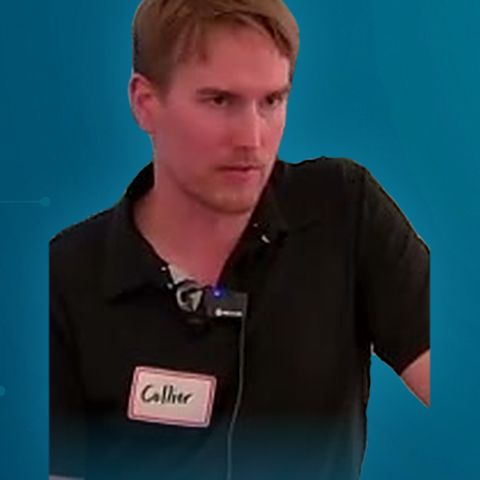
In this talk from the Austin AI Middleware Users Group (AIMUG) September Showcase, Collier King introduces Deep Agents, a batteries-included deep research framework inspired by Claude Code and built on top of LangGraph.
Resources
Write-up
Overview
Collier King presented LangChain’s new Deep Agents framework - a Python package that brings Claude Code’s best patterns to LangGraph. The talk demonstrated how Deep Agents solves the “shallow agent” problem through sustained context, long-term planning, complex workflows, and parallelization.
The Problem: Shallow Agents
Traditional Agent Limitations
- Simple LLM calling tools in a loop until condition met
- Doesn’t work for complicated use cases
- Key pain points:
- Sustained context is difficult
- Long-term planning is tough
- Complex workflows not feasible
- Parallelization and delegation not easy
The Solution: Deep Agents
What is Deep Agents?
- Python package inspired by Claude Code
- Harrison (LangChain founder) reverse-engineered Claude Code
- All LangGraph under the hood
- Simple function call bootstraps entire agent:
create_deep_agent()
Growth Trajectory
- Brand new framework but growing rapidly
- Log-scaled star history shows strong adoption
- Growth trajectory comparable to LangChain/LangGraph
Four Core Components
1. Planning Tool
- Reverse-engineered from Claude Code
- Creates and tracks plans through to-do lists
- Maintains focus over long executions
- Enables agents to stay on track
2. Sub-Agents System
- Subordinate agents with own prompts and tools
- Context quarantine prevents pollution
- Main agent not flooded with irrelevant details
- General purpose sub-agent handles background tasks
Example sub-agent creation:
# Simple sub-agent definition
- Name
- Description
- Prompt
- Model (can differ from main agent)
3. System Prompts
- Built-in system prompt from Claude Code
- Currently not editable (part of the package)
- LangChain says: “This is what makes this package good”
- User can only customize via instructions parameter
- On roadmap to allow customization
4. Virtual File System
- Built on LangGraph state object
- In-memory file system (not actual files)
- Enables parallel execution without conflicts
- Sub-agents can create/edit virtual files
- Scales well for concurrent operations
Built-in Tools
Five essential tools come standard:
- To-do list:
write_todos()function - Write file: Create virtual files
- Read file: Access virtual files
- LS: List virtual files
- Edit file: Modify virtual files
These tools enable:
- Sub-agents tracking their work
- Main agent delegating effectively
- Rapid file editing in succession
- State management across agents
Live Demo: Product Manager Research Agent
Use Case
Collier demonstrated a product manager research tool for Cloudflare’s Workers AI:
Questions addressed:
- Who are our customers?
- What are their use cases?
- Are we solving their problems?
- What are we telling them (marketing)?
- What are they telling us (social media)?
Implementation
- Marketing sub-agent: Analyzes outbound materials
- Social media sub-agent: Analyzes customer feedback
- Both extract use cases and personas
- Main agent compares outputs (Venn diagram analysis)
- Identifies gaps and overlaps
Results (1 minute 48 seconds with Sonnet)
Overlapping use cases:
- AI application development
- Serverless AI computing
- Edge AI processing
- Image processing
Marketing overemphasis:
- Threat intelligence
- Automated social media
- Focus on CTOs/CISOs vs individual developers
- Large enterprise focus
Performance notes:
- Analyzed 500 random social media posts
- Processed extensive marketing materials
- Sonnet: ~1:48 execution time
- Opus: Higher quality but slower
Configuration & Setup
Simple initialization:
create_deep_agent(
    tools=[...],        # Your custom tools
    prompt=instructions, # Your instructions
    sub_agents=[...],   # Optional sub-agents
    model=...          # LLM selection
)
Returns:
- Planning tool
- File system
- System prompts for sub-agents
- General purpose sub-agent
- Complete LangGraph agent
Advanced Features
Observability
- Post-model hook parameter for logging
- Verbose logging recommended
- Without logging: “What is going on?”
- Essential for debugging complex workflows
Human-in-the-Loop
- Supported via LangGraph features
- Interrupt capabilities
- MCP adapter integration
Execution Pattern
- Agent writes to-dos
- Launches sub-agents
- Tracks completion status
- Compares results
- Provides recommendations
Q&A Insights
Q: Does it support human-in-the-loop?
- Yes, built on LangGraph features
- Documented in README
- Full interrupt capabilities
Q: How do you add observability?
- Use post_model_hook parameter
- Pass custom logger
- Essential for understanding execution
Key Takeaways
- Deep Agents = Claude Code patterns + LangGraph power
- Solves shallow agent problems through better architecture
- Virtual file system enables safe parallelization
- Context quarantine prevents pollution
- Production-ready for deep research use cases
Recommendations
- Check out Colin’s blog for detailed tutorials
- Start with simple use cases
- Use verbose logging initially
- Test with different models (Sonnet vs Opus)
- Consider for research-heavy applications
Resources
- 📺 Watch Collier’s Deep Agents Talk on YouTube
- Presentation Slides (PDF)
- Deep Agents GitHub Repository:
github.com/langchain-ai/deep-agents - Colin’s Deep Agents blog post (mentioned in talk)
- LangGraph Documentation
- Post_model_hook examples in README
About the Speaker
Collier King works at Cloudflare and specializes in distributed AI systems and multi-agent coordination. He actively uses LangGraph in production systems and contributes to the Austin AI community.
Same night
 1:36:55Austin AI MUG: September Showcase | Thunderstorm Talks (LangChain, Claude Code, Deep Agents & More)Coding agents
 15:53Claude Code & Custom AgentsSal Castoro · Coding agents
 22:08LangChain & LangGraph 1.0 Alpha UpdateColin McNamara · LangGraph
 17:13Rosie the Robot: Desktop Automation with AgentsJames Coffey · Agents
 16:55Streamlit for AI DashboardsJeff Linwood